Since 1987 - Covering the Fastest Computers in the World and the People Who Run Them
Since 1987 - Covering the Fastest Computers in the World and the People Who Run Them Server Rack Power
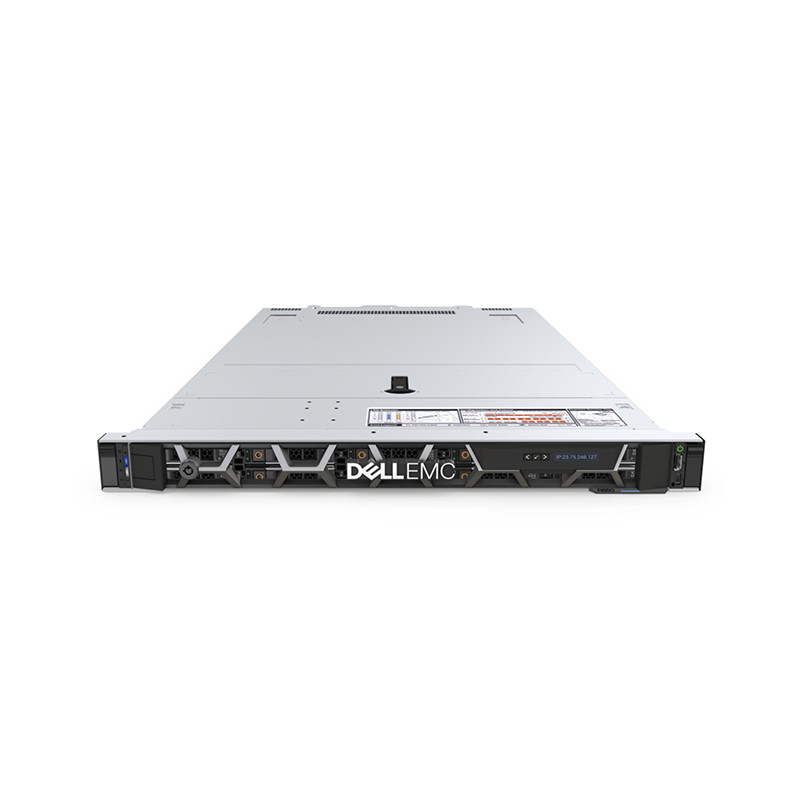
TAIPEI, Taiwan, Aug. 3, 2021 Chenbro, a leader in the design and manufacturing of own-brand rackmount system, is excited to announce the latest SR113 rackable tower server chassis to increase deep learning through powerful multi-GPGPU and storage configurations. Supporting CRPS/ATX PSU (EEB SKU), the proprietary mainboard can be loaded with up to 5 double-width GPGPU cards to accelerate many of today’s best-known machine learning software stacks. Developers and SMBs now have access to more compute capability with IT architecture that is capable of taking in great sets of data.
The SR113 brings a rack mount and pedestal stand-alone design for seamless inclusion of new technology to any environment. Chenbro brings together powerful computing and storage options in a single 4U server chassis design to establish cost-effective and high-efficiency solutions for ease of integration. It helps enterprises reduce deployment time in an IT environment and solve the most critical challenges in their business. Equipped with a front bezel lock to prevent unauthorized access, securing internal drive cages, the SR113 supports key lock, a 3-wire intrusion switch, and a Kensington security slot to ensure a secure IT deployment. With a multi-drive cage design and effective thermal performance, even at maximum (5) GPGPU capacity, IT can deploy with confidence at an enterprise scale.
Designed for Diverse and Demanding Workloads
The SR113 rackable tower server chassis is 4U dual-socket server platforms designed for adaptability. The SR113 links with Chenbro’s reference motherboard program and features a multi server board support:
Expandable storage and PCIe options are ideal for high-performance computing of large datasets in accelerated HPC/AI training, deep learning, machine learning, photorealistic rendering, 3D simulation and animation, scientific simulation and analysis, and big data computing and analysis.
The power of machine learning, whether in a rack or a standalone pedestal, is available for all organizations. Additionally, anti-shock and anti-vibration technologies maintain the high computing stability required for data security and reading speed for data storage. Chenbro provides the affordable, efficient, secure, and productive workstation solution which can be configured specifically for the needs of all organizations from SMBs to large enterprises.
Optimized Thermal Performance and Multiple Storage Matrix
Graphic design and digital content production require high workloads, and the need for thermal performance is essential. The chassis structure design benefits better airflow as well as fan installation. In addition to the middle 4 hot-swap fans, the optional fans are dedicated to offering additional cooling for the maximum supported expansion cards serving as the basis for the ideal system thermal behavior. Flexible thermal solutions are available for different configurations. With 2 x 5.25” media bay and 1 x 3.5” drive bays, the SR113 also supports 2 x 4-bay 3.5” hot-swap SAS/SATA and an optional 8 x 2.5” SAS/SATA for maximum configuration flexibility.
Powering the Scale of Artificial Intelligence
With the addition of optimized thermal designs, Chenbro delivers a complete multi-GPGPU option and multi-drive cage design for high performance and reliability for AI and deep learning applications. Whether it is data collection and analysis near the edge or data preparation and training in the data center or real-time inference at the AI core, SR113 has it covered.
With optimized thermal design for high-performance workloads in a 4U chassis, Chenbro has formed the basis for highly cost-effective and efficient resources in answer to some of the most critical business challenges SMB. With SR113, reliability help enterprises meet the dramatic increase for the underlying infrastructure of artificial intelligence and machine learning applications, making it ideal for photorealistic rendering, 3D simulation and animation, scientific simulation and analysis, big data computing, and analysis, etc.
4U Rackable Tower Server Chassis Now Available
The Chenbro SR113 4U rackable tower server chassis for multi GPGPU applications is ideal for AI inference, deep learning, professional visualization, and data computing applications, applicable to an extensive range of IoT industries of IoT. SR113 is now available to buy from Chenbro and Chenbro’s channel partners.
Click here to learn more about the Chenbro SR113: http://www.chenbro.com.tw/en-US/products/TowerServerChassis/High_End_chassis_for_Enterprise/SR113
Founded in 1983, Chenbro (TWSE: 8210) has been a trailblazer in designing and manufacturing of own-brand rackmount system, tower server and PC chassis for over 38 years. Chenbro is not only qualified by the first-tier server brands and provides OEM, ODM and JDM services with EMS companies, but also successfully extends its business footprint to datacenters and industrial solutions by continuously investing in technologies and delivers the most trusted server and PC chassis with the highest standard of innovation. For more information about Chenbro, please visit http://www.chenbro.com
Be the most informed person in the room! Stay ahead of the tech trends with industy updates delivered to you every week!
Many panels at SC22 focused on how supercomputing centers can help others recover from disasters – but one panel, “Facing the Unexpected: Disaster Management Capabilities,” focused mainly on how supercomputing cent Read more…
Is it possible to get quantum advantage without actually using a quantum device? One Swiss start-up, Terra Quantum, says it’s not only possible but that doing so is a core part of its business model, which uses clever Read more…
Intel's ongoing reorganization has a new victim: the AXG group – which was formed in 2021 – is now mincemeat after it was chopped up on Wednesday. The consumer graphics portion of AXG (Accelerated Computing Systems and Graphics Group) will fold into the client computing group, while the enterprise accelerated computing operations of AXG will move over the data center group. Read more…
On December 5th, the research team at the National Ignition Facility (NIF) at Lawrence Livermore National Laboratory (LLNL) achieved a historic win in energy science: for the first time ever, more energy was produced by Read more…
By now, most people are aware of the vast amount of trash currently clogging our oceans, with the Great Pacific garbage patch alone estimated to be twice the size of Texas. Ocean pollution threatens the lives of the peop Read more…
When we launched the Elastic Fabric Adapter (EFA) at re:Invent 2018, we delivered on a goal of accelerating computational fluid dynamics (CFD) and weather applications in Amazon EC2, without sacrificing the elasticity, regional availability, cost, and instance choice that makes EC2 so popular. Read more…
In terms of AI developments, 2022 proved to be a banner year. AI production and usage increased and both deep learning and machine learning models steadily conquered increasingly complex problems. Read more…
The European Union will release €270 million in funds as it tries to attain technology independence by building chips based on the open RISC-V instruction set architecture. The EuroHPC Joint Undertaking (EuroHPC JU) Read more…
Many panels at SC22 focused on how supercomputing centers can help others recover from disasters – but one panel, “Facing the Unexpected: Disaster Managemen Read more…
Is it possible to get quantum advantage without actually using a quantum device? One Swiss start-up, Terra Quantum, says it’s not only possible but that doing Read more…
Intel's ongoing reorganization has a new victim: the AXG group – which was formed in 2021 – is now mincemeat after it was chopped up on Wednesday. The consumer graphics portion of AXG (Accelerated Computing Systems and Graphics Group) will fold into the client computing group, while the enterprise accelerated computing operations of AXG will move over the data center group. Read more…
On December 5th, the research team at the National Ignition Facility (NIF) at Lawrence Livermore National Laboratory (LLNL) achieved a historic win in energy sc Read more…
By now, most people are aware of the vast amount of trash currently clogging our oceans, with the Great Pacific garbage patch alone estimated to be twice the si Read more…
The European Union will release €270 million in funds as it tries to attain technology independence by building chips based on the open RISC-V instruction set Read more…
Argentina’s Minister of Science, Technology and Innovation and its Minister of Defense announced this week that the country would soon host a new Top500-worth Read more…
Texas Advanced Computing Center Director Dan Stanzione and HPCwire Managing Editor Tiffany Trader met in Dallas to discuss the biggest trends in HPC and the hot Read more…
Nvidia is not interested in bringing software support to its GPUs for the RISC-V architecture despite being an early adopter of the open-source technology in its GPU controllers. Nvidia has no plans to add RISC-V support for CUDA, which is the proprietary GPU software platform, a company representative... Read more…
One of the original RISC-V designers this week boldly predicted that the open architecture will surpass rival chip architectures in performance. "The prediction is two or three years we'll be surpassing your architectures and available performance with... Read more…
It is perhaps not surprising that the big cloud providers – a poor term really – have jumped into quantum computing. Amazon, Microsoft Azure, Google, and th Read more…
NVIDIA is excited to announce the release of the stdexec library on GitHub and in the 22.11 release of the NVIDIA HPC Software Development Kit. The stdexec libr Read more…
Chipmakers regularly indulge in a game of brinkmanship, with an example being Intel and AMD trying to upstage one another with server chip launches this week. But each of those companies are in different positions, with AMD playing its traditional role of a scrappy underdog trying to unseat the behemoth Intel... Read more…
Most talk about quantum computing today, at least in HPC circles, focuses on advancing technology and the hurdles that remain. There are plenty of the latter. F Read more…
AMD’s fourth-generation Epyc processor line has arrived, starting with the “general-purpose” architecture, called “Genoa,” the successor to third-gen Eypc Milan, which debuted in March of last year. At a launch event held today in San Francisco, AMD announced the general availability of the latest Epyc CPUs with up to 96 TSMC 5nm Zen 4 cores... Read more…
The European Union will release €270 million in funds as it tries to attain technology independence by building chips based on the open RISC-V instruction set Read more…
Fusion, the nuclear reaction that powers the Sun and the stars, has incredible potential as a source of safe, carbon-free and essentially limitless energy. But Read more…
The steady maturation of MLCommons/MLPerf as an AI benchmarking tool was apparent in today’s release of MLPerf v2.1 Inference results. Twenty-one organization Read more…
Amid the high-performance GPU turf tussle between AMD and Nvidia (and soon, Intel), a new, China-based player is emerging: Biren Technology, founded in 2019 and headquartered in Shanghai. At Hot Chips 34, Biren co-founder and president Lingjie Xu and Biren CTO Mike Hong took the (virtual) stage to detail the company’s inaugural product: the Biren BR100 general-purpose GPU (GPGPU). “It is my honor to present... Read more…
Intel is opening up its fabs for academic institutions so researchers can get their hands on physical versions of its chips, with the end goal of boosting semic Read more…
For all of its politeness, a fascinating panel on the last day of SC22 – Quantum Computing: A Future for HPC Acceleration? – mostly served to illustrate the Read more…
Intel's engineering roots saw a revival at this week's Innovation, with attendees recalling the show’s resemblance to Intel Developer Forum, the company's ann Read more…
The 60th edition of the Top500 list, revealed today at SC22 in Dallas, Texas, showcases many of the same systems as the previous installment, with Frontier stil Read more…
Intel has had trouble getting its chips in the hands of customers on time, but is providing the next best thing – to try out those chips in the cloud. Delayed chips such as Sapphire Rapids server processors and Habana Gaudi 2 AI chip will be available on a platform called the Intel Developer Cloud, which was announced at the Intel Innovation event being held in San Jose, California. Read more…
© 2022 HPCwire. All Rights Reserved. A Tabor Communications Publication
HPCwire is a registered trademark of Tabor Communications, Inc. Use of this site is governed by our Terms of Use and Privacy Policy.
Server Rack Cost Reproduction in whole or in part in any form or medium without express written permission of Tabor Communications, Inc. is prohibited.